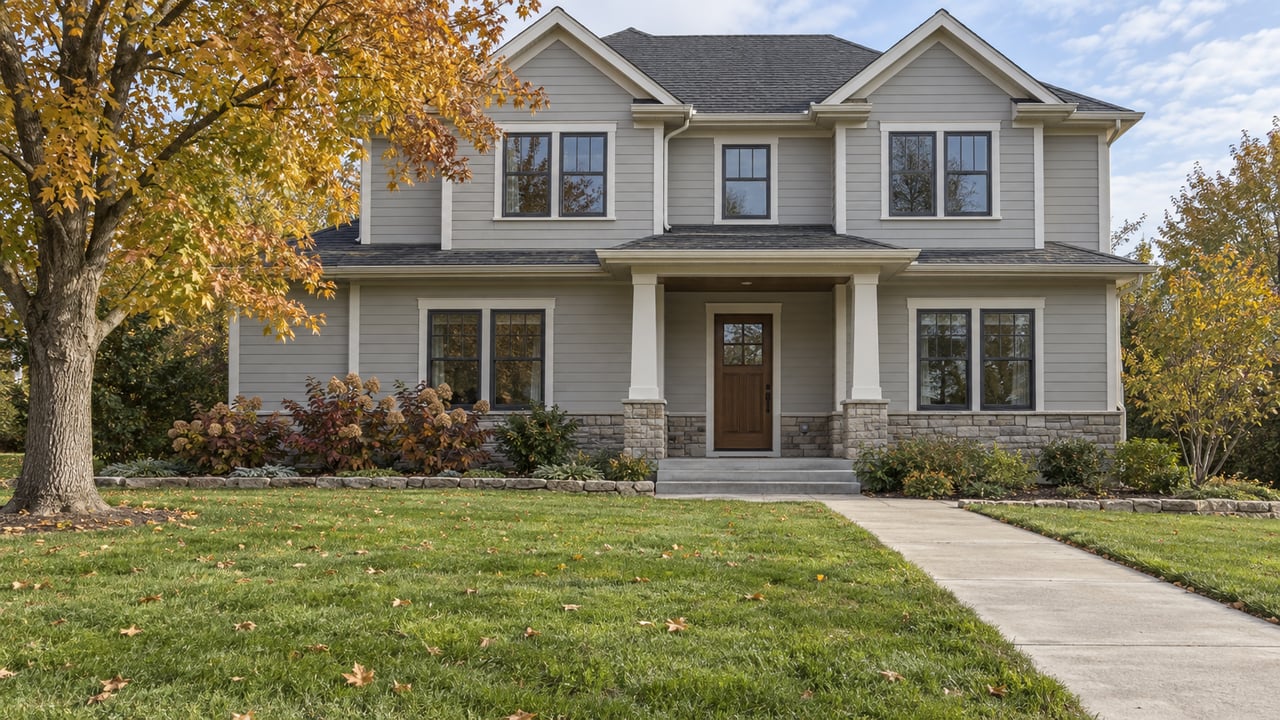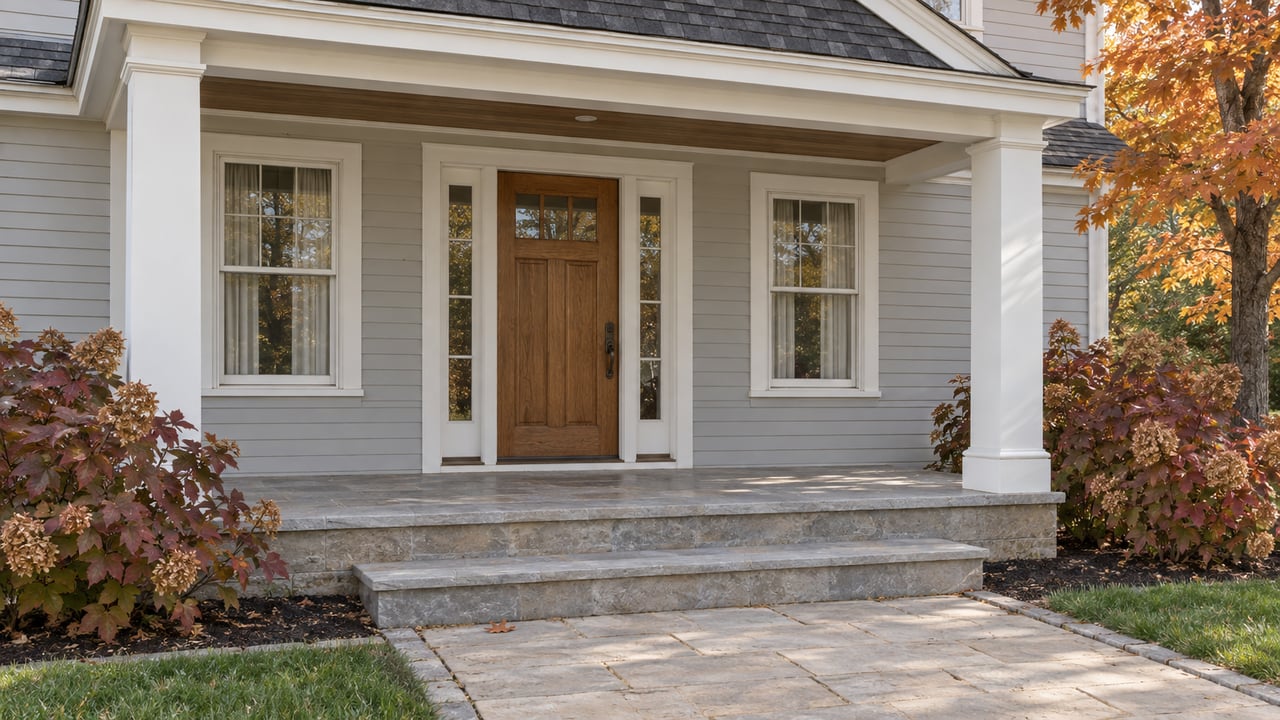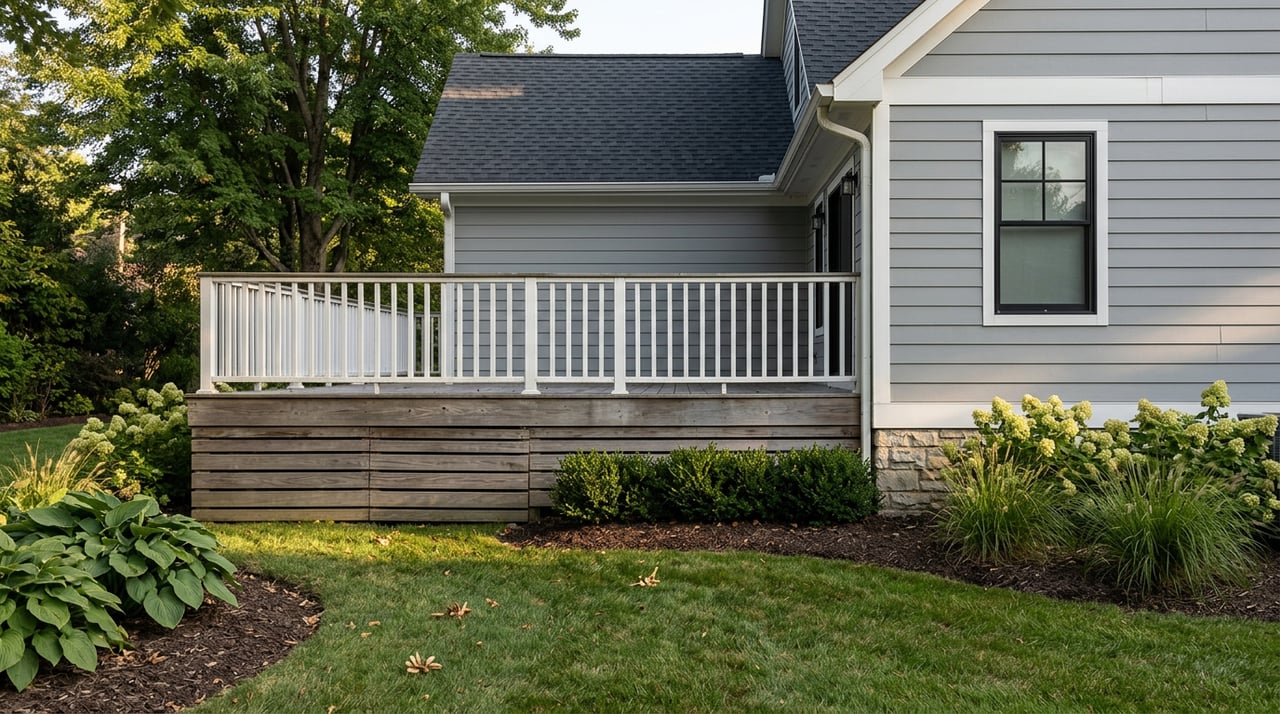
A homeowner in one of New Albany's HOA-governed neighborhoods spends a July weekend getting the house ready to list. The deck gets restained. The garage door, faded from a decade of sun, gets swapped for a new one. A hot tub goes in on the back patio as a selling point for the next owner. None of it feels like a decision that needs anyone's permission. It's the seller's house, the seller's money, the seller's weekend.
Then the buyer's attorney or the title company starts asking questions.
That is the mechanism most out-of-town sellers, and more than a few longtime residents, don't fully appreciate about this market: in New Albany, the paper trail on exterior changes follows the house, not the person who made them, according to New Albany Links' guidelines.
Two layers of approval, not one
New Albany runs design review at the city level and, in most residential subdivisions, again at the homeowners association level. The city's Architectural Review Overlay District, codified in Chapter 1157, gives its Design Guidelines and Requirements "the force and effect of law." That is not marketing language from an HOA newsletter. It is city ordinance, and violating it carries real fines: up to $10,000 for an individual property owner who alters or demolishes a structure without approval, and up to $50,000 for a business entity that does the same.
Layered on top of that, most New Albany subdivisions run their own architectural review process through their homeowners association. New Albany's city ARB reviews plans, drawings, and signage and issues Certificates of Appropriateness for environmental changes within its overlay district. Separately, individual communities like New Albany Links, New Albany Country Club, and Hampsted Village maintain their own architectural review boards with their own guideline documents.
There is a third layer some sellers don't think about at all: the New Albany Communities Master Association, which describes itself as an umbrella overseeing shared aesthetic standards across the individual communities, on top of whatever rules a homeowner's specific HOA already enforces.
Why "four-sided architecture" is the standard, not a suggestion
New Albany's own design principles document, updated as recently as June 2026, states plainly that four-sided architecture is the guiding standard for the community. In practice that means a home's rear and side elevations are held to the same level of detail as the front facade facing the street, which is part of why exterior changes anywhere on the house, not just the parts visible from the road, fall under review.
The individual HOA guidelines get specific fast, and the specifics vary block to block. New Albany Links, a private community of roughly 600 single-family homes built around its namesake golf club, requires deck flooring and stair treads to stay within brown and gray tones, citing Sherwin Williams Superdeck and Benjamin Moore Arborcoat as reference points. Hot tubs are not permitted at all on lots that abut or are visible from the golf course, according to New Albany Links' architectural review guidelines.
New Albany Country Club HOA goes further into building materials themselves, requiring specific window and door products, including Pella EnduraClad Plus exterior paint on clad windows and doors, with named carve-outs for homes in the Keswick, Lansdowne, and Richmond Square sections. That means two houses a few streets apart inside the same overall community can be operating under different material requirements.
Citywide, the rules get granular in ways that catch people off guard during a pre-listing refresh. They are easy to miss if a seller hires a contractor without checking with the city.
The line that actually explains the friction
Here is the sentence that gets to the heart of it. New Albany Links' own guidance to homeowners preparing to sell states that the management company can flag "current assessments due, any credits on an account, or any outstanding violations that need resolved so as not to hinder the sale of a property." That is the HOA itself telling sellers, in writing, that an unresolved architectural violation can hold up a closing.
It pairs with another detail buried in the same set of guidelines: approval documentation for exterior work is something "the homeowner" must maintain and transfer to subsequent owners. Put those two together and the mechanism is clear. The approval record for a deck, a paint color, a window replacement, or a hot tub is not paperwork a seller can quietly let expire when they move. It is an asset, or a liability, that rides along with the property through the sale.
For buyers, it means asking for that documentation is not an unusual request. It is standard practice in a community built this way.
A short pre-listing checklist for New Albany sellers
Before a New Albany listing goes live, a few calls are worth making ahead of the photographer:
- Contact the HOA's management company early to ask about outstanding violations or assessments tied to the property, not just the account balance.
- Pull together approval paperwork for any exterior work done during your ownership: deck rebuilds, paint changes, garage door replacements, landscaping that altered grade or added hardscape.
- If the home sits inside the city's Architectural Review Overlay District, confirm separately with the city whether any exterior change since purchase needed its own Certificate of Appropriateness, since city approval and HOA approval are tracked independently.
- If a project happened before your ownership and no documentation exists, raise it with the HOA management company now rather than let a buyer's attorney find it later.
It is about having the paper trail ready so a design-review question doesn't become a closing-week scramble.
Even the yard sign has a spec sheet
The level of detail extends to the sign announcing the sale itself. Hampsted Village's guidelines specify that real estate signs must be no larger than 30 by 40 inches, painted or PVC vinyl in "New Albany Blue" with white lettering, mounted on a white 4-by-4 post, centered in the front yard in line with the front door, and never placed in the tree lawn. It is a small detail, but it is a useful signal of how far the community's design consistency reaches, right down to how a "for sale" sign is allowed to look on the lawn.
Frequently asked questions
Does this apply to every home in New Albany? Not identically. The city's Architectural Review Overlay District covers specific areas, and under New Albany's zoning code, requests for variances are handled differently depending on location: inside the Village Center they go to the Architectural Review Board, outside it they go to the Board of Zoning Appeals. Most of the platted residential subdivisions layer their own HOA design review on top of whichever city process applies to their lot.
What if I never got approval for something the previous owner did? The violation can still surface during a sale, since the HOA's own process is built around checking for outstanding issues before a listing goes live. Getting ahead of it with the management company, rather than waiting for a buyer's team to find it, is the better position to negotiate from.
Is this unique to New Albany, or common in planned communities generally? Architectural review is common in planned communities across central Ohio, but New Albany's four-sided architecture standard and the layering of city ordinance on top of individual HOA guidelines make its process more involved than what a seller typically encounters in a standard subdivision.
If you are preparing to list in New Albany, or trying to understand what a listing's design-review history actually means for your closing timeline, the Dedra Lucas Group works inside this exact process regularly. Let's Connect and walk through what your specific community's approval history looks like before it becomes a closing-week surprise.
This article is general information, not legal, tax or financial advice. Consult a qualified professional about your situation.